CAD / Project story
Linked Documents Prototype
Keep a source item and its local reference visible together.
A reference between two collections
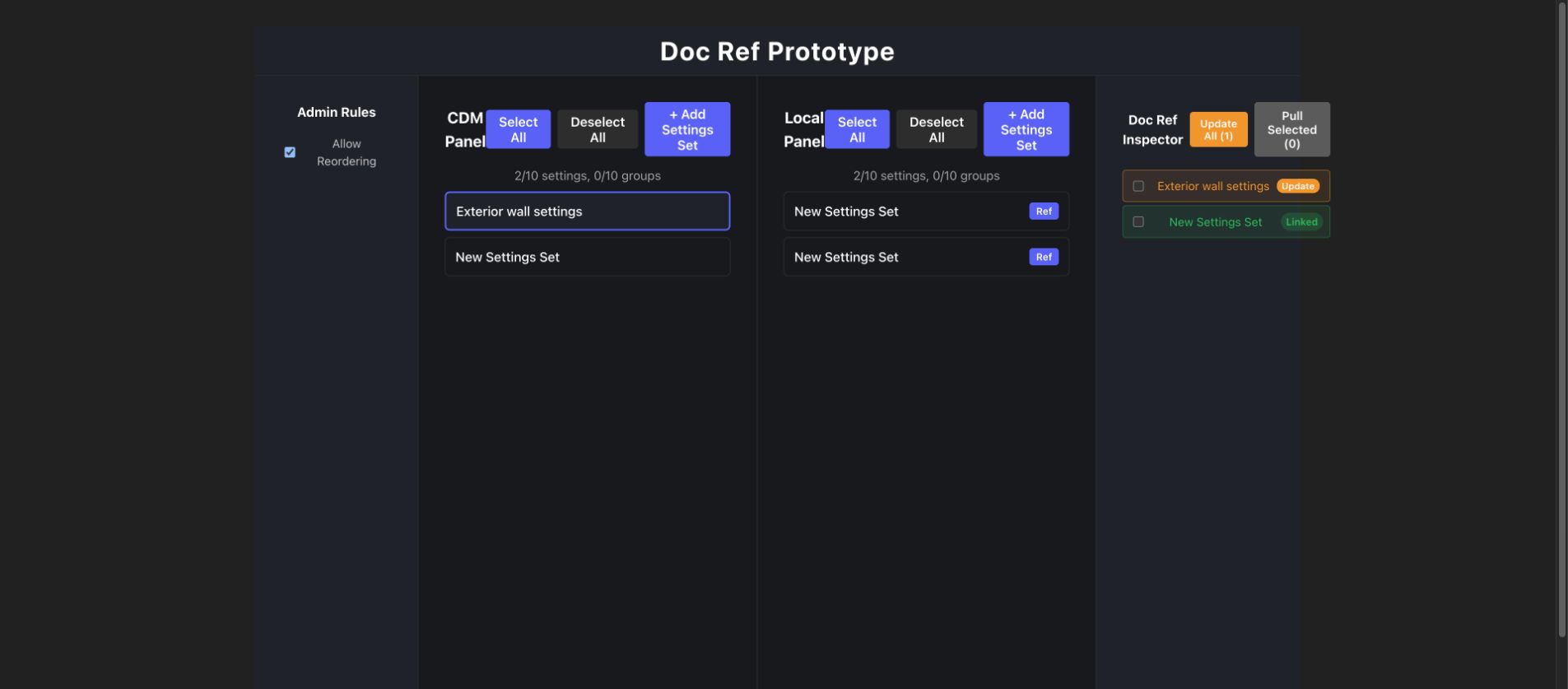
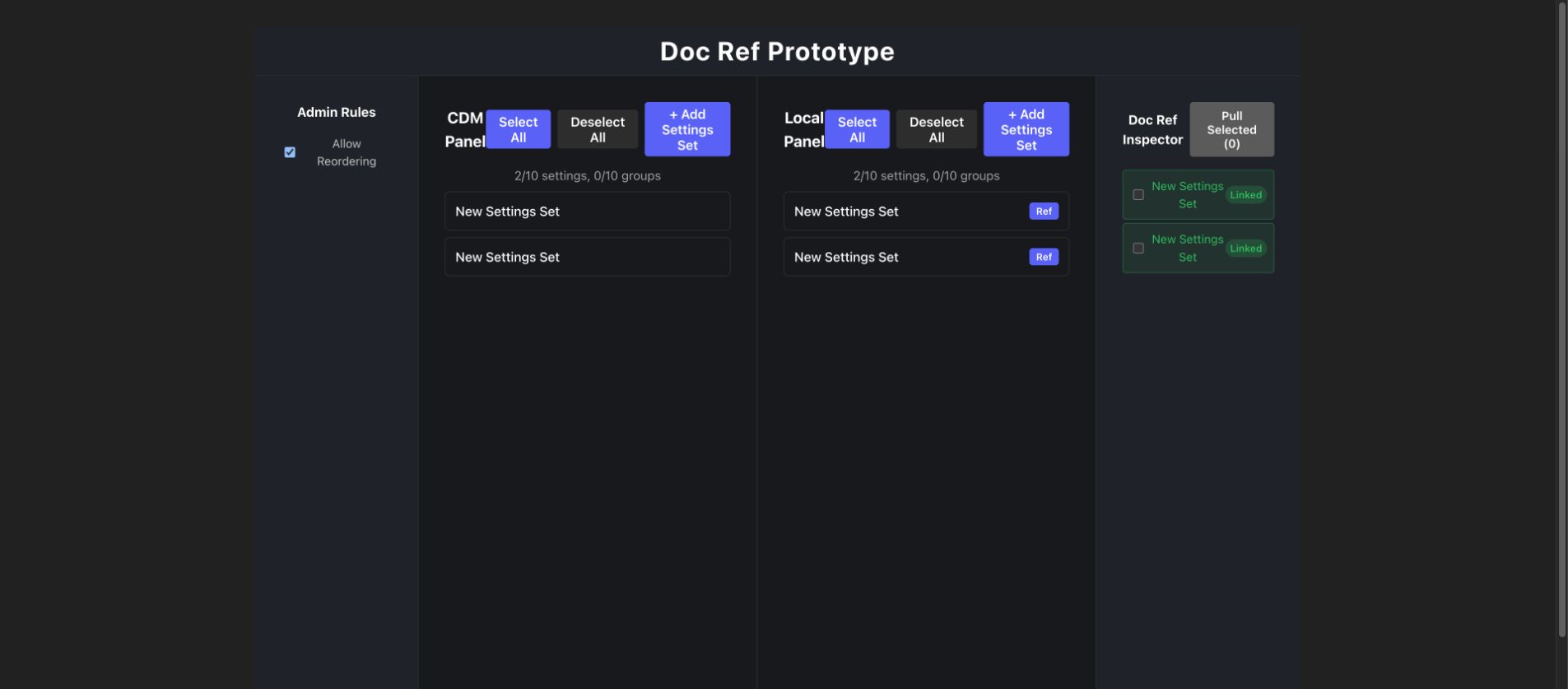
Linked Documents Prototype places a source collection and a local collection beside each other. The source panel is labeled CDM, and a separate Doc Ref Inspector lists items that can be pulled into the local file. Settings sets and groups provide a small model of content that can be reused while retaining a connection to its origin.
The prototype begins with empty collections. Add a few synthetic source items, select them in the reference inspector, and pull them into Local. The resulting entries have reference markers rather than appearing indistinguishable from locally created items. That visible difference is the central interaction.
Bringing changes across
The inspector tracks which source items are already linked and which linked items need updates. Update Selected and Update All offer two scopes for bringing changes across. A source item can therefore remain recognizable through the sequence of creating it, pulling it, changing it, and considering its local update.
Groups add membership and ordering to the example. Their children can be expanded in the inspector and selected together. An Allow Reordering control exposes a rule that affects the local experience. The interface keeps these choices near the source and local lists so the consequences can be compared in one workspace.
A simulation, not a document service
This is a restored version of the original client-side interaction prototype. The source and local collections are simulated inside the page, not connected to a live company document system. The current example is held in memory and begins again on reload; it should not be used as a place to keep important work.
The screenshot contains only synthetic settings sets. Open the prototype to create a small source collection, pull a reference, and explore its update states. It provides a concrete way to examine local ownership and source relationships without requiring real project documents or presenting the prototype as a finished synchronization service.